OPEN LETTER: EDUCATION WA- Formal Complaint: Erasure of Djukun Identity, Compulsory Yawuru Language Instruction, and Interference with Cultural Expression in Broome
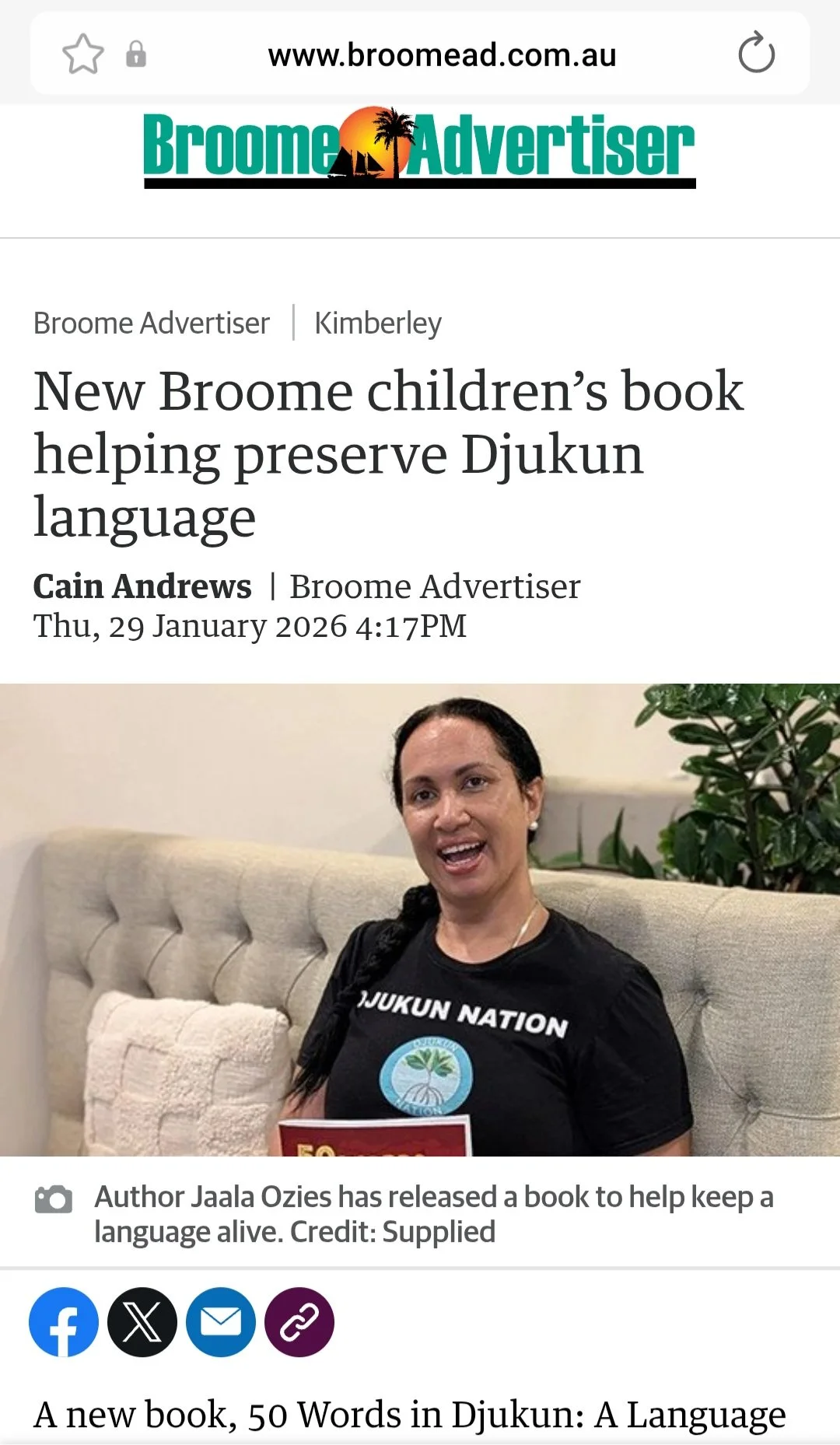
Broome Advertiser Article link here
Delivered by email: 18th February, 2026
To The Department of Education of Western Australia and Aboriginal Advisory Council of Western Australia,
OPEN LETTER - Formal Complaint: Erasure of Djukun Identity, Compulsory Yawuru Language Instruction, and Interference with Cultural Expression in Broome
Nature of Complaint
I am lodging this formal complaint to raise serious concerns regarding the erasure of the Djukun identity in Broome and the role of the education system in perpetuating this erasure. This includes the compulsory teaching of the Yawuru language in schools located on Djukun Country, and broader actions that suppress Djukun cultural expression and visibility.
This complaint relates specifically to:
• The ongoing marginalisation and non-recognition of the Djukun people in Broome.
• The suppression of Djukun cultural heritage, including the near extinction of the Djukun language.
• The compulsory nature of Yawuru language instruction in schools on Djukun Country.
• The lack of choice, balance, and cultural fairness within Indigenous education.
• Institutional challenges to the promotion of Djukun language. Institutional actions that have interfered with Djukun cultural expression and public visibility.
Background and Context
Broome is located on Djukun Country. Despite this, the Djukun people and their cultural identity have been progressively erased from public recognition, including within the education system. The influence of Nyamba Buru Yawuru (NBY) and the Yawuru Native Title Holders Prescribed Body Corporate (Yawuru PBC) has, in my view, contributed to creating a dominant cultural narrative that excludes and suppresses Djukun identity.
The dominant cultural narrative contributes to the marginalisation of Djukun cultural heritage. Of particular relevance to this complaint is the loss of the Djukun language which is now nearly extinct.
While the inclusion of Djukun language in local school curricula would facilitate language preservation, it is not presently taught in any schools in the Broome area to my knowledge.
The lack of representation and support within schools further entrenches the erasure of Djukun cultural identity and undermines cultural diversity, historical accuracy, and Indigenous self-determination.
Human Rights Framework
Australia is a signatory to the United Nations Declaration on the Rights of Indigenous Peoples (UNDRIP), which affirms the rights of all Indigenous peoples to maintain and protect their distinct cultures and identities.
Article 13 of UNDRIP states:
“Indigenous peoples have the right to revitalize, use, develop and transmit to future generations their histories, languages, oral traditions, philosophies, writing systems and literatures…”
These rights apply equally to the Djukun people. Current formal education practices in Broome, fail to promote these rights by prioritising one Indigenous language and identity, being that of the Yarawu people, while excluding the Djukun language on its own Country.
The inclusion of the Djukun language in Broome schools would align with Article 13 of UNDRIP and facilitate the Djukun people’s ability to transmit their language to future generations.
Specific Concerns
• Erasure of Djukun Identity
Djukun people are not adequately acknowledged in school curricula, cultural programs, or public educational narratives in Broome.
• Suppression of Djukun Language and Culture
There is no meaningful support for Djukun language revitalisation, contributing to its near extinction.
• Compulsory Yawuru Language Instruction
The exclusive and mandatory teaching of Yawuru language in schools on Djukun Country is culturally inappropriate and exclusionary, particularly for Djukun students and families who may view this as a de-prioritisation of their own language and cultural experiences.
• Lack of Choice and Consent
Students and families are not offered a genuine choice to opt out or to learn an Indigenous language relevant to their own identity or Country. In circumstances where there are two language groups in the area, it does not make sense for only one to be included in the curriculum.
• Cultural fairness and self-determination
The compulsory elevation of one Indigenous language and identity over others creates an imbalance that undermines cultural fairness and self‑determination.
Difficulties in promotion of Djukun language
School-based language learning, in addition to community led efforts, would assist our children to develop their Djukun language skills.
In December 2025, I launched a book titled '50 Words in Djukun: A Language of the West Kimberley'. This is an example of community-based project to promote the Djukun language.
I organised a children’s book launch celebrating Djukun identity and culture, scheduled to be held at the Broome Public Library. Nyamba Buru Yawuru was formally invited to attend the launch.
Instead of engaging with the event directly, I understand that Nyamba Buru Yawuru contacted the Shire of Broome Corporate Services to remind the Shire of the Memorandum of Understanding (MOU) between NBY and the Shire of Broome. Following this communication, the Shire of Broome withdrew permission for the book launch to proceed at the Broome Public Library, resulting in the event being effectively cancelled at that venue.
Despite this, the book launch proceeded at an alternative venue. The event received public recognition and media coverage, including stories by The Broome Advertiser and ABC Kimberley. Broome Advertiser link here;
This is an example of why community efforts would benefit greatly from the support of formal education institutions in the transmission of language learning.
This incident is of serious concern, as it demonstrates how institutional relationships and agreements are being used in ways that restrict Djukun cultural expression, visibility, and self‑representation in public spaces. Such actions contribute to the broader pattern of erasure and exclusion experienced by Djukun people in Broome.
The absence of Djukun language in schools programmes in Broome is another institutional challenge which makes it difficult for the community to assert its rights in line with Article 13 of UNDRIP.
Requested Outcomes
I respectfully request that the WA Department of Education:
• Formally acknowledge the Djukun people and Djukun Country in Broome.
• Review the exclusion of Djukun history and language from the school curriculum.
• Reconsider the compulsory and exclusive nature of Yawuru language instruction in Broome schools.
• Implement choice‑based, inclusive, and locally representative Indigenous education models.
• Ensure that education policies do not contribute to the suppression or silencing of Djukun cultural expression.
• Engage directly with Djukun people to develop programmes for establishing and promoting cultural recognition and language preservation in Broome schools.
Conclusion
Education should empower students through knowledge, respect, and choice—not compel them to learn a language or adopt an identity that may not be their own. Genuine reconciliation and cultural respect require recognition of all Indigenous peoples, not the elevation of one at the expense of another.
I request a written response outlining how this complaint will be addressed.
Yours sincerely,
Jaala Ozies
On behalf of and for the Djukun Nation
