Open Letter: Objection to Public Materials for the Broome Primary School 125-Year Celebrations
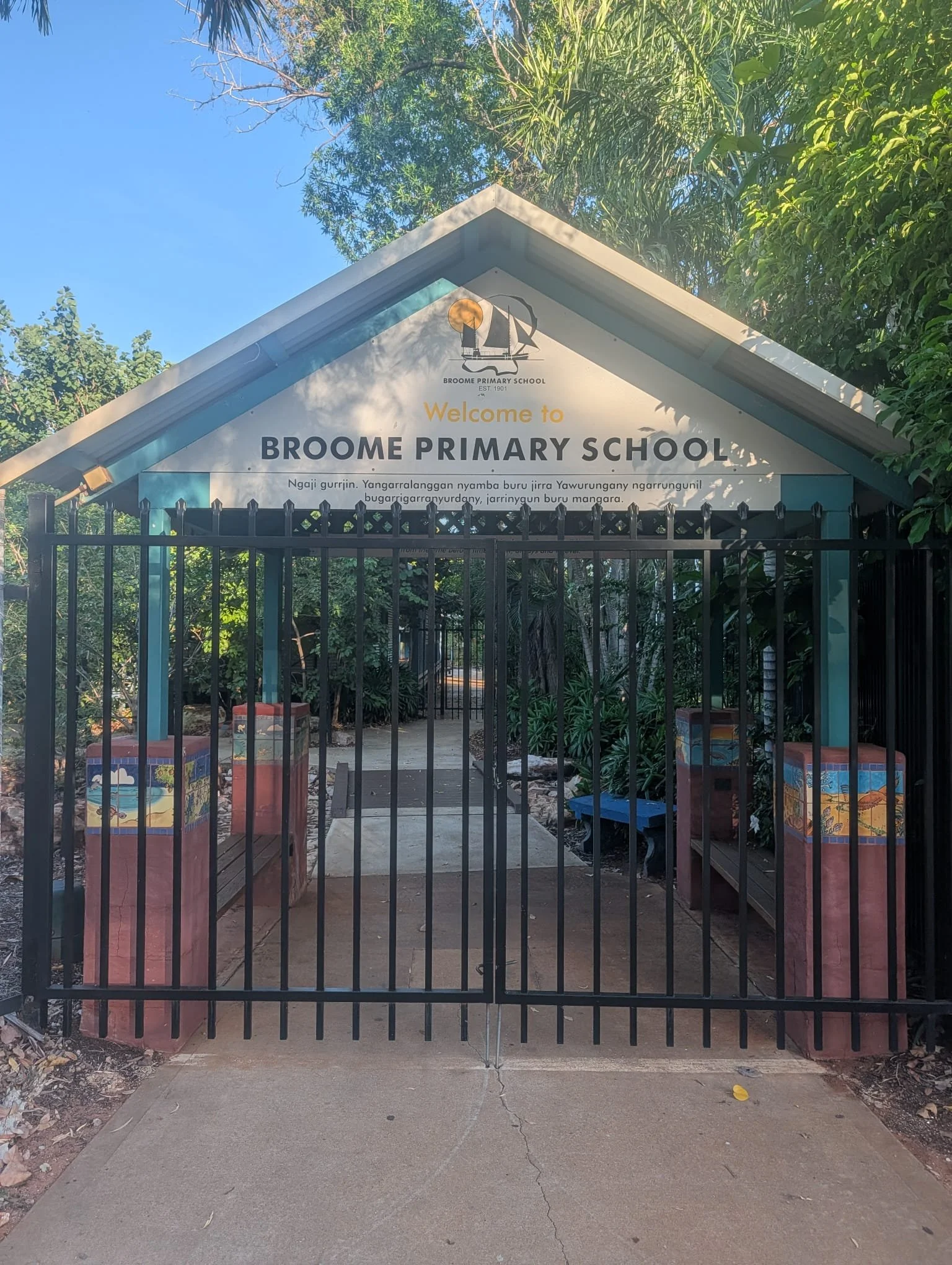
Broome Primary School Front Entrance
Dear Principal of Broome Primary School, Department of Education and the Minister for Education Hon Sabine Winton,
I am writing as a former Broome Primary School student, a Djukun Nation advocate, a Djukun author and a Djukun language specialist to express my deep concern regarding the wording published on the promotional flyer for the school's 125-year celebrations, which states:
"Broome Live 125 years, Celebrating 125 years of Broome Primary School being on Yawuru Country."
This statement is inaccurate, exclusionary and fails to acknowledge the legal and cultural connection of the Djugun people on Country in Jirrnginngan.
The Government funded Broome Primary School is located on Djugun Country. Furthermore, the Djugun people are legally recognised as Rubibi Native Title holders alongside the Yawuru people. The Rubibi Native Title claim was a joint native title claim over Djugun Country and Yawuru Country. The land boundaries of Djugun Country and Yawuru Country are very clear as indicated on the Norman Tindale map used in the Rubibi Native Title.
Broome Primary School is currently publicly representing the school as being solely on "Yawuru Country" as indicated on the attached Broome Primary School flyer, the Broome Primary School website, the Broome Primary school and the Department of Education are effectively erasing the identity, history and ongoing presence of the Djugun people.
As educational institutions, Broome Primary School, the Department of Education and the Education Minister have a responsibility to ensure that the information they present to students, families and the wider public is inclusive, accurate and respectful of all Traditional Owners. The exclusion of the Djugun people from this important public celebration is disappointing and inconsistent with the values that the school itself promotes.
The school's stated values include:
Care: Showing kindness, empathy and concern for the wider community.
Respect: Valuing others, listening, and honouring the rich multicultural and Yawuru heritage of the school.
By only acknowledging Yawuru heritage and failing to recognise the Djugun people, Broome Primary School has not demonstrated these values in practice. Respect requires listening to all voices, particularly those of Traditional Owners whose identity and connection to Country are being overlooked. Care requires acknowledging the hurt and exclusion caused when one group's history is prioritised while another's is omitted.
Unfortunately, this is not the first time Djugun voices have been ignored. Members of the Djugun community, including former students such as myself, have consistently advocated for appropriate recognition of our people, history and connection to Country at Broome primary school. Yet our concerns continue to go unheard.
For the past three years, I have dedicated myself as a full-time volunteer to researching, documenting and helping revive the almost-extinct Djugun language. This work culminated in the recent launch of my book (information attached).
I would also like to note that I have recently published and launched that book at the Broome Public Library titled Djugun: We Speak For Our Country, which documents Djugun history, cultural heritage, language and the cultural heritage reclamation journey of the Djugun people in Jirrnginngan (Broome).
The work for the publication was a community led consultation process and language revitalisation work undertaken with Djugun Elders, families and community members. It preserves stories, historical accounts, genealogies, cultural knowledge and language that have been passed down through generations and affirms the enduring presence of the Djugun people within Jirrnginngan our ancestral homelands.
Importantly, the book highlights the undeniable, indisputable and continuing connection that the Djugun people have to Country throughout the Jirrnginngan region. It provides extensive documentation of Djugun cultural heritage, identity and language and demonstrates that the Djugun people remain deeply connected to the lands upon which many of Jirrnginngan's institutions now stand, including Broome Primary School.
As a former student of Broome Primary School, it is particularly disappointing to see Broome Primary School publicly celebrate its history while failing to acknowledge the cultural identity and connection of the Djugun Traditional Owners whose Country encompasses the school grounds. Such omissions contribute to the ongoing marginalisation, exclusion and erasure of Djugun people from the public narrative of Jirrnginngan and undermine the principles of inclusion, truth-telling and reconciliation that educational and Government institutions should uphold.
Recognition matters. For Djugun students, families and future generations, seeing their identity accurately reflected in public acknowledgements is not simply symbolic; it is fundamental to cultural respect, belonging and historical truth. Educational institutions have an important responsibility to ensure that all Traditional Owners are recognised in a manner that reflects both the legal reality and the rich cultural heritage of Country.
I respectfully request that Broome Primary school and the Department of Education review the wording used in all promotional materials associated with the 125-year celebrations and engage directly with the Djugun community to ensure that future acknowledgements accurately reflect the shared cultural and legal realities of Country in Jirrnginngan.
Education should be a place where truth, inclusion and respect are taught and practised. The Djugun people deserve no less.
I look forward to your response.
Yours sincerely,
Jaala Ozies
On behalf of and for the Djukun Nation.
Author of Djugun: We Speak For Our Country, ISBN: 9780646747552
